Vijayapura is a city in northern Karnataka, which we used as an intermediate point on our route to Badami. We had identified this place in the planning, but, as often happens, the reasons were already forgotten in our consciousness.
After an hour crossing Pune from west to east, the route makes its way through the plains of agricultural dedication, with young crops and open lands preparing to receive spring seeds.

Upon arriving in Vijayapura, three elements emerged in our consciousness: the air was cleaner and it was possible to see a blue sky, the language had changed (now we heard Kannada), and the food was different. It was necessary to do a judicious consultation exercise to understand the new breakfast offer; we had tried only two of the suggested dishes: Dosas and Idli.
Vijayapura was founded in the 10th century CE by the kings of the Rashtrakuta dynasty. The city stood out during the rule of the Adil Shahi dynasty in the 16th century, becoming the Sultanate of Bijapur, and an important cultural and architectural centre. Its ancient architecture was a great surprise and an excellent reflection of the fusion of Hindu and Islamic styles.

Gol Gumbaz, the second largest dome in the world, was built in the 17th century by Sultan Mohammed Adil Shah, seventh Sultan of Bijapur, as a mausoleum for his own tomb. Gol Gumbaz is famous for its impressive dome, which measures 37 metres in diameter and was built without a central support. Its design makes the structure act as a natural resonator, accentuating and prolonging the sound. For this, it is very attractive for visitors to climb to the balcony of murmurs and emit their sounds to feel how they echo in the dome. This is a bit deafening for those who are below, simply appreciating the structure.

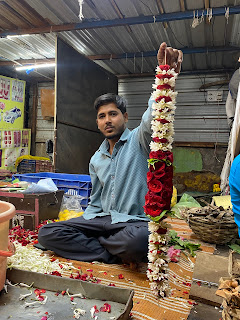
In the houses of the city you can see various structures that were part of the royal palaces of this dynasty. Temples, mosques and mausoleums characterise the city centre. When the sun goes down and the environment cools, the market is activated. Commercial premises occupy the bases and streets around the area, and a crowd with a greater Muslim presence moves frantically. We were able to enjoy a small stand of spices and incense, whose owner gave us each one to try and taught us to appreciate the differences between small and large cumin. Then we were able to learn the process of building the flower necklaces used as an offering both in the presentation of the bride and groom, when the couples are formed, and in the temples to offer to the gods. We were surprised by the number of stores with drums and other instruments, as well as the diversity of percussion instruments available in the area. We ended our tour tasting the delicious local tea that we received as a gift from the owner.

To the west of the city, Ibrahim Rauza's mausoleum is another splendid jewel. It was built in 1627 by the wife of Sultan Ibrahim Adil Shah II, sixth sultan of Bijapur. In this structure, commonly known as the black Taj Mahal or the southern Taj Mahal, sandstone of warm tones was used, and the intricate mosaic work gives a distinctive character. In addition, the mausoleum is surrounded by beautifully designed gardens, which add an air of serenity to the environment. The warm colours of the sunset illuminate the stone, creating a beautiful image that is enriched with the presence of the green parrots that use its walls.

We stayed at the hotel of the tourism commission, where we were lovingly attended by two women who took care of us with unique dedication and warmth.

Alan y Marce
En Español
Vijayapura es una ciudad del norte de Karnataka, que utilizamos como punto intermedio en nuestra ruta hacia Badami. Habíamos identificado este lugar en la planificación, pero, como suele ocurrir, las razones ya estaban olvidadas en nuestra conciencia.
Después de una hora cruzando Pune de occidente a oriente, la ruta se abre paso entre las planicies de dedicación agrícola, con cultivos jóvenes y tierras abiertas preparándose para recibir las semillas. Al llegar a Vijayapura, tres elementos emergieron en nuestra conciencia: el aire estaba más limpio y era posible ver un cielo azul, el lenguaje había cambiado (ahora escuchábamos Kannada), y la comida era diferente. Fue necesario hacer un ejercicio juicioso de consulta para entender la nueva oferta de desayuno; solo habíamos probado dos de los platos sugeridos: Dosas e Idli.
Vijayapura fue fundada en el siglo X por los reyes de la dinastía Rashtrakuta. La ciudad se destacó durante el dominio de la dinastía Adil Shahi en el siglo XVI, convirtiéndose en el Sultanato de Bijapur, y en un importante centro cultural y arquitectónico. Su arquitectura antigua fue una gran sorpresa y un excelente reflejo de la fusión de estilos hindúes e islámicos.
Gol Gumbaz, la segunda cúpula más grande del mundo, fue construida en el siglo XVII por el sultán Mohammed Adil Shah, séptimo sultán de Bijapur, como mausoleo para su propia tumba. Gol Gumbaz es famosa por su impresionante cúpula, que mide 37 metros de diámetro y fue construida sin soporte central. Su diseño hace que la estructura actúe como un resonador natural, acentuando y prolongando el sonido. Por esto, resulta muy atractivo para los visitantes ascender hasta el balcón de los murmullos y emitir sus sonidos para sentir cómo resuenan en la cúpula. Esto resulta un poco ensordecedor para los que están abajo, simplemente apreciando la estructura.
En las casas de la ciudad se pueden ver diversas estructuras que formaron parte de los palacios reales de esta dinastía. Templos, mezquitas y mausoleos caracterizan el centro de la ciudad. Cuando el sol cae y el ambiente se refresca, el mercado se activa. Locales comerciales ocupan las bases y las calles alrededor del área, y una multitud con mayor presencia musulmana se mueve frenéticamente. Pudimos disfrutar de un pequeño puesto de especias e inciensos, cuyo dueño nos dio a probar cada uno y nos enseñó a apreciar las diferencias entre el comino pequeño y el grande. Luego pudimos aprender el proceso de construcción de los collares de flores utilizados como ofrenda tanto en la presentación de los novios, cuando se configuran las parejas, como en los templos para ofrendar a los dioses. Nos sorprendió la cantidad de tiendas con tambores y tablas, así como la diversidad de instrumentos de percusión disponibles en la zona. Terminamos nuestro recorrido degustando el delicioso té local que recibimos como un regalo por parte del dueño.
Al oeste de la ciudad, el mausoleo de Ibrahim Rauza es otra espléndida joya. Fue construido en 1627 por la esposa del sultán Ibrahim Adil Shah II, sexto sultán de Bijapur. En esta estructura, comúnmente conocida como el Taj Mahal negro o el Taj Mahal del sur, se utilizó arenisca de tonos cálidos, y el intrincado trabajo de mosaico le da un carácter distintivo. Además, el mausoleo está rodeado de jardines bellamente diseñados, que añaden un aire de serenidad al entorno. Los cálidos colores de la puesta de sol iluminan la piedra, creando una hermosa imagen que se enriquece con la presencia de los loros verdes que usan sus paredes.
Nos alojamos en el hotel de la comisión de turismo, donde fuimos atendidos con cariño por dos mujeres que nos cuidaron con una dedicación y calidez únicas.


No comments:
Post a Comment